Filter
Sort by:
Anklets & Elbow Guards
Two very different pieces of equipment, both worth having for reasons most people do not think about until it is too late.
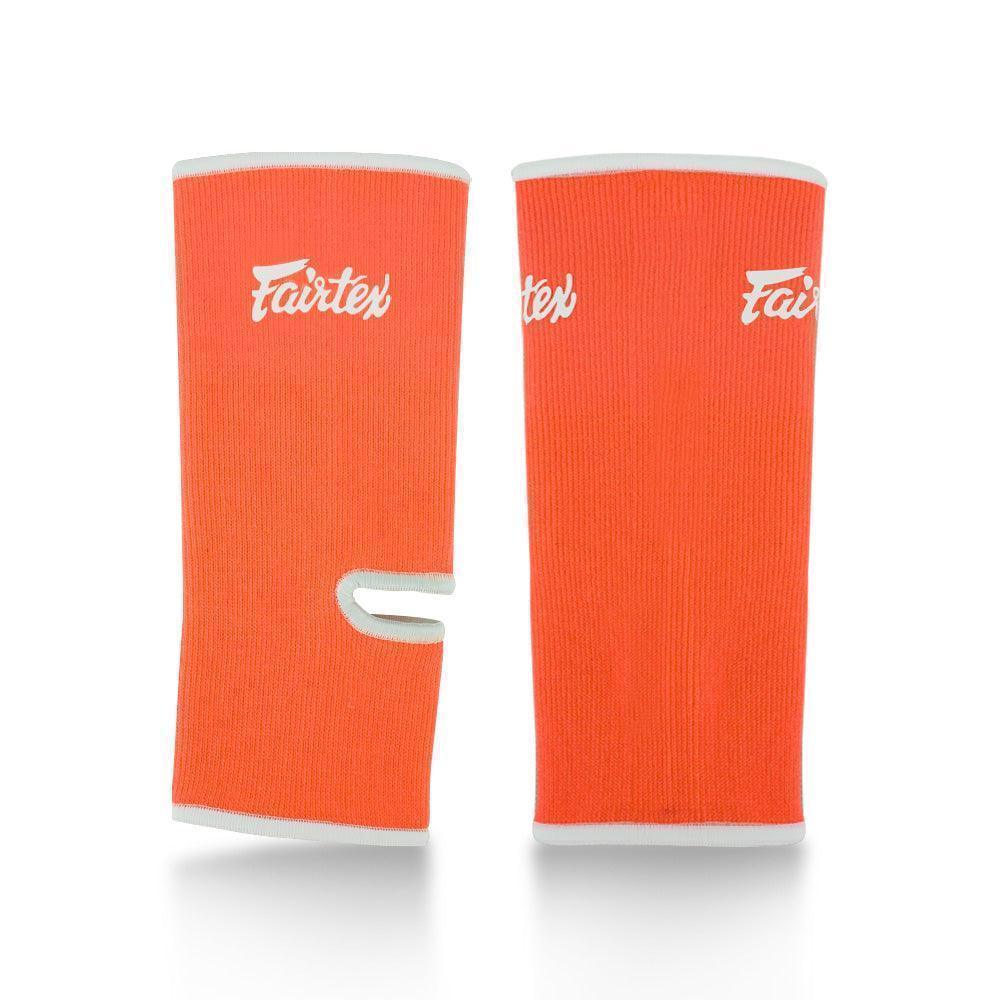
Ankle supports
Ankle supports are not there to protect you from being hit. They are there to protect you from your own footwork.
Muay Thai pivots on the ball of the foot — every round kick, every switch, every time you turn a hip over. Do that a few hundred times a session, on a hard floor, and the ankle joint takes a beating that has nothing to do with your opponent. Add a mistimed landing coming back from a kick, or an awkward step while evading, and that is how ankles roll.
A compression anklet stabilises the joint, supports the ligaments, and keeps the ankle warm — and a warm joint is a considerably harder joint to injure than a cold one.
Who should wear them
- Anyone who has rolled an ankle before. It will happen again.
- Anyone training on hard floors rather than mats.
- Anyone doing high-volume kicking or long pad sessions.
- Anyone coming back from injury.
They should be snug, not tight. If your foot goes cold or numb, they are too small.
Elbow guards
Elbows are the reason Muay Thai has a reputation, and they are also the reason most gyms do not let beginners throw them in sparring.
When you do start, elbow guards pad the point of the elbow so you can drill and spar the technique without opening anyone up — including yourself. They also protect your own elbow when you are blocking, which is a job people forget about until they have taken a shin on a bare joint.
Essential if your gym spars with elbows. Unnecessary if it does not.
A note on fit
Both are compression items, and both need to stay where you put them. Anything that slides down during a round is doing nothing except annoying you. Check the sizing against your calf and forearm measurements rather than guessing from a clothing size.
See also shin guards and all protection.