
Muay Thai is a combat sport from Thailand known as "the Art of Eight Limbs" because fighters use punches, kicks, elbows and knees. It is one of the most effective striking martial arts in the world, practised by millions globally and with a rich cultural heritage dating back centuries. Whether you are training for fitness, competition or self-defence, understanding the language of Muay Thai will help you get more from your training.
Muay Thai has its own language. Walk into any gym and you will hear Thai commands, technique names and cultural terms that can feel overwhelming at first. This glossary covers everything from basic strikes to ceremonial traditions, organised by category so you can find what you need quickly.
Whether you are a beginner trying to follow your trainer's instructions or a fan wanting to understand fight commentary, this guide has you covered.
Punches and Hand Strikes
Mat / Mahd (หมัด)
Mat means punch or fist in Muay Thai. It is the general term for any punching technique. When your trainer says "mat", they are telling you to throw a punch.
Yab / Jab (แย็บ)
A yab is a jab, the straight punch thrown with your lead hand. It is used to measure distance, set up combinations and keep your opponent at range.
Mat Dtrong (หมัดตรง)
Mat dtrong is a cross or straight punch thrown with the rear hand. "Dtrong" means straight. This is your power punch, rotating from the hips for maximum force.
Mat Dtawaad / Hook (หมัดเหวี่ยง)
A hook punch thrown in an arc to the side of the opponent's head or body. In Thai gyms you will often hear the English word "hook" used interchangeably.
Mat Soi / Uppercut (หมัดเสย)
An uppercut punch travelling upward to the chin or body. Effective in close range and clinch entries.

Kicks
Dtae / Te (เตะ)
Dtae means kick in Muay Thai. It is the general term for any kicking technique using the leg or shin.
Teep / Thip (ถีบ)
A teep is a push kick or foot jab, one of the most important techniques in Muay Thai. It is used to create distance, disrupt an opponent's rhythm, stop their forward momentum or set up other strikes.
To throw a teep, you chamber your knee toward your chest, then thrust your hip forward while extending your leg and driving your hips forward. The ball of your foot makes contact with your target, typically the opponent's hip, stomach, solar plexus or face. Your standing leg should remain slightly bent for balance, and your hands stay up to protect your chin - although the arm on the kicking side can be extended for balance.
The teep is often called the "foot jab" because it serves similar purposes to a boxing jab: measuring distance, keeping your opponent at range, and disrupting their timing. A well-timed teep can stop a charging opponent in their tracks or push them off balance before they can launch their own attack. The teep should feel like a thrust from the hip, not a leg extension.
You will hear variations like "teep dtrong" (straight teep to the body) and "teep na" (teep to the face). The teep is fundamental to Muay Thai strategy and one you should master to ensure your arsenal is well rounded.

Teep Dtrong (ถีบตรง)
A straight push kick to the front, typically targeting the stomach or solar plexus. "Dtrong" means straight or direct.
Dtae Dtad / Roundhouse Kick (เตะตัด)
The roundhouse kick is Muay Thai's signature strike and one of the most powerful techniques in any striking martial art. Unlike a karate or taekwondo kick that snaps from the knee, the Muay Thai roundhouse is thrown with the entire body, using hip rotation to generate devastating power.
To throw a proper roundhouse, you step diagonally with your lead foot, pivot on the ball of that foot, rotate your hips and shoulders together, and swing your rear leg in an arc. Your shin, not your foot, makes contact with the target. The kicking leg stays relatively straight and relaxed, turning over at the hip. Your standing foot pivots on the ball, and your arm on the kicking side swings down and back to counterbalance the rotation.
Roundhouse kicks can target three main areas: the legs (low kick), the body (body kick) and the head (high kick). In traditional Thai scoring, clean kicks to the body and head score highly, often more than punches. A body kick that visibly affects your opponent or makes them stumble can win you the round.
The key to a powerful roundhouse is committing fully to the rotation. Beginners often "arm" the kick, using mostly leg strength. The power comes from turning your whole body into the strike, with the leg acting as the whip.
Dtae Chiang (เตะเฉียง)
A diagonal or angled kick, typically a low kick targeting the opponent's thigh. Low kicks are used to damage the legs and reduce mobility over the course of a fight.
Low Kick
A low kick is a roundhouse kick targeting the opponent's leg, typically the outer quadricep or inner thigh. It is one of the most effective weapons in Muay Thai for accumulating damage over the course of a fight.
A single low kick might not end a bout, but repeated low kicks deaden the leg, reduce mobility and make it harder for your opponent to generate power in their own kicks. Low kicks can also be used to off-balance an opponent as they step forward.
The leg kick is thrown with the shin, not the foot, and requires full hip rotation to generate power. Checking low kicks (blocking with the shin) is an essential defensive skill.
Question Kick
A feint technique where the fighter raises their knee as if throwing a teep but switches to a roundhouse kick mid-motion. The name comes from the leg movement resembling a question mark.
Knees
Kao / Khao (เข่า)
Kao means knee in Muay Thai. Knee strikes are among the most powerful and highest-scoring weapons in the sport. A clean knee to the body can end a fight or dramatically shift momentum in your favour.
Knees can be thrown at various ranges. In the clinch, fighters use short, sharp knees to the body and thighs while controlling their opponent's head and posture. At mid-range, you can drive a knee forward without clinching by stepping in explosively. And at distance, the flying knee (kao loy) is a spectacular technique that can knock out an opponent who does not see it coming.
The clinch is where knee fighters, known as "muay khao", do their best work. By controlling the opponent's head and neck, they can pull them into repeated knees to the body, wearing them down over the course of a fight. This style requires excellent conditioning and grip strength.
Knees are thrown by driving the hip forward and upward, not just lifting the leg. Think of thrusting your hip into the target with your knee as the point of contact. Common targets include the solar plexus, floating ribs, thighs and (in the clinch) the head.

Kao Dtrong (เข่าตรง)
A straight knee strike driven directly forward into the opponent's body, typically targeting the solar plexus or stomach.
Kao Chiang (เข่าเฉียง)
A diagonal or curved knee strike that travels at an angle, often targeting the ribs or floating ribs from the side.
Kao Loy (เข่าลอย)
A flying or jumping knee strike where the fighter leaps into the air to deliver the knee. Spectacular and high-scoring when landed clean.
Kao Dtad (เข่าตัด)
A horizontal knee strike swung in a cutting motion, often used in the clinch to attack the thighs or midsection.
Elbows
Sawk / Sok (ศอก)
Sawk means elbow in Muay Thai. Elbow strikes are devastating close-range weapons that frequently cause cuts, and a deep cut over the eye can stop a fight. The elbow is one of the hardest points on the human body, making it an incredibly effective striking tool.
Elbows can be thrown at multiple angles: diagonal (slashing down at 45 degrees), horizontal (cutting across), uppercut (driving upward), and spinning (rotating the body for added power). Each angle targets different areas and creates different types of damage. The diagonal elbow targeting the eyebrow is particularly effective at causing cuts that bleed into the opponent's eye.
The best opportunities for elbows come in close range: after catching a kick, in the clinch, or when an opponent ducks into a strike. Experienced fighters also use elbows as counters, stepping into a punch and landing an elbow before the opponent can reset.
In Thailand, elbows are legal and common in professional fights. Some organisations outside Thailand restrict or ban elbow strikes due to the risk of cuts. If you are competing, always check the ruleset.
Sawk Dtee (ศอกตี)
A diagonal elbow strike slashing downward at approximately 45 degrees, typically targeting the eyebrow or temple to cause a cut.
Sawk Dtad (ศอกตัด)
A horizontal cutting elbow thrown parallel to the ground, slicing across the opponent's face or temple.
Sawk Gnad / Sawk Ngad (ศอกงัด)
An uppercut elbow driven upward under the opponent's chin or into their body. Effective when in close range.
Sawk Glab (ศอกกลับ)
A spinning back elbow where the fighter rotates their body to deliver the elbow with rear momentum. High-risk, high-reward technique.
Clinch and Grappling
Chap Kho / Djab Ko (จับคอ)
Chap kho means clinch in Muay Thai, literally translating to "grab the neck." The clinch is a standing grappling position where fighters control each other's head, neck or arms while battling for position to land knees, elbows and sweeps.
Unlike boxing or kickboxing where the referee quickly separates clinched fighters, Muay Thai allows extended clinch work. This is a defining feature of the sport and where many fights are won and lost. A fighter with superior clinch technique can neutralise a striker's advantages and impose their own game.
The dominant clinch position is the double collar tie (plam), with both hands clasped behind the opponent's head. From here, you can pull their head down to disrupt their posture, create angles for knees, and set up sweeps. The fighter being controlled will try to establish their own grips, create frames with their arms, or work to an underhook position.
Clinch fighting requires different conditioning than striking at range. It demands grip strength, core stability, and the ability to maintain output while fatigued. Many fighters neglect clinch training, which creates opportunities for those who specialise in it.

Plam (พลำ)
The standard double collar tie position in the clinch, with both hands clasped behind the opponent's head. This is the dominant clinch position for landing knees.
Ting / Sweep (ทิ้ง)
Ting means to throw or sweep an opponent off balance. Sweeps and dumps score highly with judges as they demonstrate dominance and control. A successful sweep leaves the opponent on the ground while you remain standing.
Dump
A clinch technique where you forcefully throw your opponent to the ground, typically by controlling their neck and using off-balancing footwork. Dumps score well and demonstrate clinch dominance.
Defensive Techniques
Bat (บัด)
Bat means to block or parry in Muay Thai. Basic defensive technique using the arms, hands or shins to stop incoming strikes.
Check
A check is a defensive technique where you raise your shin to block an incoming kick. It is the primary defence against low kicks and body kicks in Muay Thai, and learning to check properly is essential for protecting yourself.
To check a kick, you lift your knee and turn your shin outward to meet the incoming strike. The goal is to block with the upper part of your shin, near the knee, where the bone is thickest. If your opponent's kick lands on your knee or upper shin, it can cause significant damage to their leg, which is why some fighters actively use checks as offensive weapons.
Proper checking requires balance and timing. You need to read the kick early, lift your leg quickly, and maintain your base on the standing leg. Many beginners make the mistake of lifting the leg too late, causing them to absorb the kick on their thigh instead of blocking it.
Shin conditioning is important for checking. Over time, your shins become more durable through training on heavy bags and pads. New students often find checking painful at first but this improves with consistent training.
Pang Nga (ป้องงา)
Pang nga means to evade or dodge. Defensive movement using footwork, head movement or body positioning to avoid strikes rather than blocking them.
Catch
Catching a kick means grabbing your opponent's leg after they throw a kick. Once caught, you can off-balance them, sweep them or counter-strike while they are on one leg.
Training Commands
When training with Thai coaches or in traditional gyms, you will hear these commands regularly. Learning them will help you follow instructions and show respect for the art.
Dtee (ตี)
Dtee means hit or strike. A general command telling you to throw a strike.
Chok (ชก)
Chok means to punch or to fight. "Chok dee" means good luck and is commonly said to fighters before a bout.
Yud (หยุด)
Yud means stop. When your trainer says yud, stop what you are doing immediately.
Reu (เร็ว)
Reu means fast or quick. Your trainer wants you to increase your speed.
Sha (ช้า)
Sha means slow. Slow down and focus on technique rather than speed.
Sai (ซ้าย)
Sai means left. Strike with your left side or move to your left.
Kwa (ขวา)
Kwa means right. Strike with your right side or move to your right.
Kradot (กระโดด)
Kradot means jump. Used for jumping techniques like kao loy (flying knee).
Dern (เดิน)
Dern means walk. When your trainer says dern, they want you to move forward with consistent pressure, advancing on your opponent.
Toy (ถอย)
Toy means retreat or back up. "Mai toy" means don't retreat, keep the pressure on.
Dtoi Lom (ต่อยลม)
Dtoi lom means shadow boxing, literally "boxing the air." Essential training for developing technique, footwork and combinations without a partner.
Fighting Styles
Muay Thai fighters are often categorised by their dominant fighting style. These styles describe a fighter's preferred weapons and strategic approach.
Muay Femur (มวยเฟมเวอร์)
Muay femur is a technical, cerebral fighting style focused on timing, footwork and fight intelligence rather than raw power. Fighters who use this style are considered the most skilful in Muay Thai, often described as having a high "fight IQ."
Muay femur fighters do not rush. They read their opponents, identify patterns, and exploit weaknesses with precise timing. They use feints to draw reactions, create angles with footwork, and counter with accuracy rather than power. A muay femur fighter might not throw the most strikes, but the ones they throw tend to land clean.
Famous muay femur fighters include Samart Payakaroon (often called the greatest Muay Thai fighter of all time), Saenchai (known for his unorthodox creativity) and Superlek (current ONE Championship star). This style is effective at any range and rewards patience over aggression.
Muay Khao (มวยเข่า)
Muay khao is a knee fighter style that specialises in clinch work and devastating knee strikes. Muay khao fighters pressure opponents into the clinch and wear them down with knees to the body. This style requires exceptional conditioning and strength. Famous examples include Dieselnoi and Petchboonchu.
Muay Mat (มวยมัด)
Muay mat is a heavy puncher style characterised by aggressive forward pressure and knockout power. Muay mat fighters come out swinging from the first bell, looking for early finishes with powerful punches and low kicks. Famous examples include Anuwat Kaewsamrit and Rodtang.
Muay Tae (มวยเตะ)
Muay tae is a kicker style that specialises in devastating leg and body kicks. Muay tae fighters use their reach and kicking power to control distance and break down opponents. Famous examples include Buakaw Banchamek and Yodsanklai.
Muay Sok (มวยศอก)
Muay sok is an elbow specialist style, possibly the most devastating and bloodiest approach. Muay sok fighters excel at close range, using elbows to cut opponents and cause stoppages.
Cultural and Ceremonial Terms
Art of Eight Limbs
The Art of Eight Limbs is the nickname for Muay Thai, referring to the eight points of contact used in fighting: two fists (punches), two elbows, two knees and two shins (kicks). This distinguishes Muay Thai from Western boxing, which uses only the fists (two limbs), and standard kickboxing, which typically uses fists and feet (four limbs). The phrase captures what makes Muay Thai unique: fighters can strike effectively at any range using their entire body as a weapon.
Muay Boran (มวยโบราณ)
Muay Boran means "ancient boxing" and refers to the traditional martial arts of Thailand that predate modern Muay Thai. It encompasses various regional fighting styles that were used by Thai warriors in battle, including techniques now considered too dangerous for sport: headbutts, certain joint locks and strikes to downed opponents.
Modern Muay Thai evolved from Muay Boran when rules were introduced in the 20th century to make it safer for competition. Some gyms still teach Muay Boran techniques for self-defence and cultural preservation, though they are not permitted in the ring.

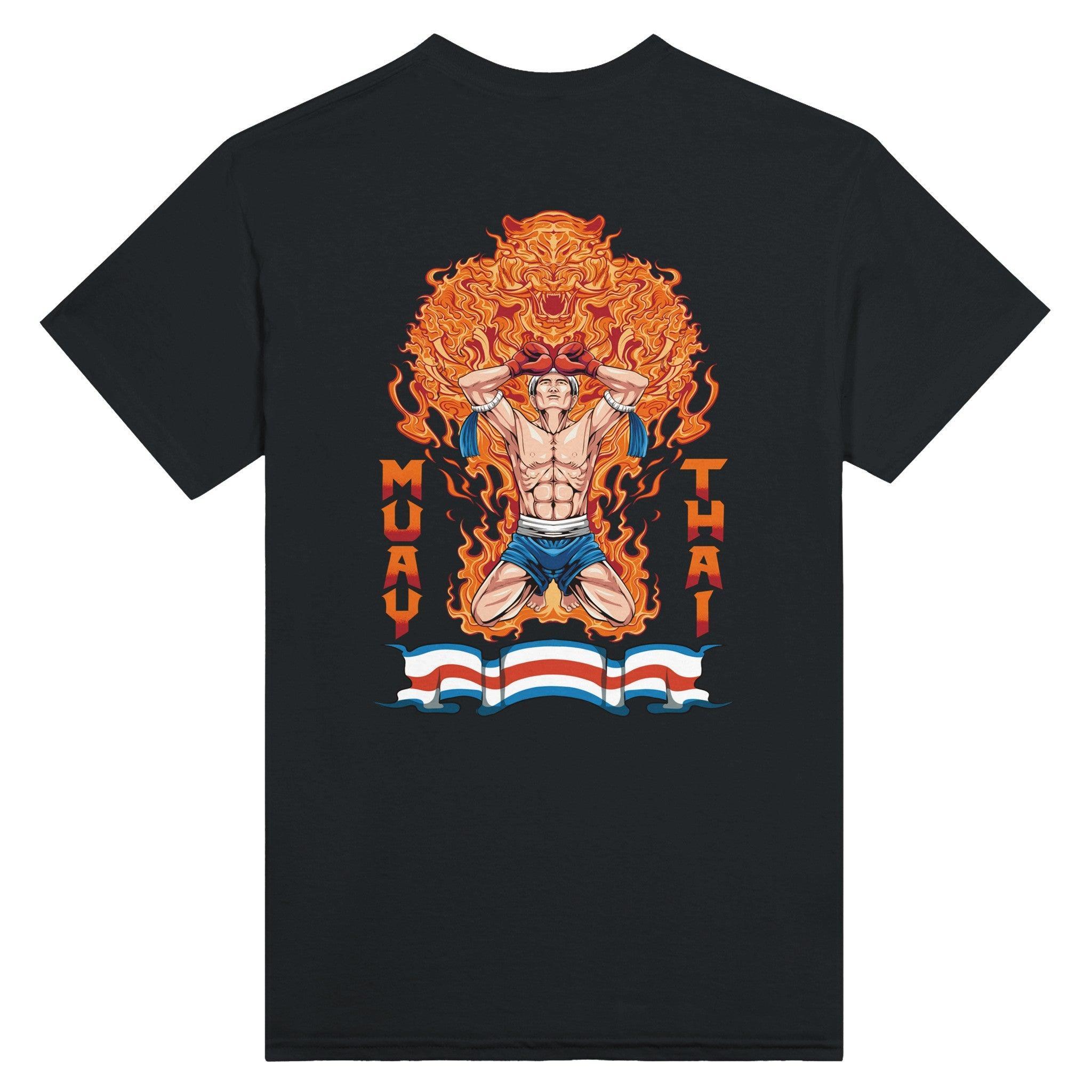
Wai Kru (ไหว้ครู)
Wai kru is a ritual ceremony performed by Muay Thai fighters before a bout. "Wai" is the traditional Thai greeting with palms pressed together, and "kru" means teacher. Together, the wai kru pays respect to the fighter's teachers, parents, gym and the art of Muay Thai itself.
The ceremony begins with the fighter circling the ring three times, typically touching each corner post. They then kneel in the centre of the ring and perform a series of bows, often touching their forehead to the canvas. The movements express gratitude and seek blessings for safety and success in the fight.
The wai kru is deeply rooted in Thai Buddhist culture, though fighters of all backgrounds perform it. Muslim fighters from Southern Thailand often add their own variations while maintaining the spirit of respect. The ceremony serves both spiritual and practical purposes, as it also functions as a warm-up and mental preparation before combat.
Even the most fearsome knockout artists perform their wai kru with full focus. Skipping or rushing through it would be considered disrespectful. The ceremony is followed by the ram muay (boxing dance), and together they form the complete pre-fight ritual.
Ram Muay (รำมวย)
Ram muay is a traditional dance performed after the wai kru and before the fight begins. "Ram" means dance in classical Thai style, and "muay" means boxing. The ram muay is more personalised than the wai kru and often reflects the fighter's gym, region or personal story.
Each gym has its own distinctive ram muay that students learn as they progress. Experienced observers can identify which gym a fighter comes from by watching their ram muay. Some fighters add personal flourishes or tell stories through their movements: historical battles, mythological scenes or tributes to people they have lost.
The ram muay is performed to live sarama music, which sets the rhythm for the movements. The dance includes gestures that symbolise warriors preparing for battle: scanning the horizon for enemies, paying respects to the spirits, and demonstrating courage. While it may look purely ceremonial to outsiders, fighters often use the ram muay to settle nerves and focus their minds for the fight ahead.
Mongkol / Mongkhon (มงคล)
A mongkol is a sacred headband worn by Muay Thai fighters during the wai kru and ram muay. It is one of the most recognisable symbols of the sport and carries deep spiritual significance.
The mongkol represents the fighter's gym and the knowledge passed down from their teacher. It is typically blessed by Buddhist monks before being given to a fighter, and is believed to provide protection and good fortune in battle. Some mongkols contain sacred objects or inscriptions inside them.
Traditionally, only the trainer, not the fighter, should handle the mongkol. After the wai kru and ram muay are complete, the trainer removes the mongkol while both pray together. The fighter never wears it during the actual fight. Some fighters believe that dropping the mongkol or having it touched by an outsider can remove its protective power.
Modern fighters outside Thailand may not follow all traditional practices, but the mongkol remains an important symbol of connection to Muay Thai's heritage. Even fighters who are not Buddhist often wear one out of respect for the tradition and their teachers.

Prajiad / Prajioud (ประเจียด)
Prajiad are armbands worn around the biceps during Muay Thai fights. Unlike the mongkol, which is removed before fighting, prajiad are kept on throughout the bout.
Traditionally, prajiad were made from torn pieces of a loved one's clothing, often a parent's sarong or a sibling's shirt. The fabric carried the blessing and protection of family members, giving the fighter strength far from home. This origin explains why prajiad symbolise connection to home and loved ones.
Modern prajiad are often made specifically for fighting and may be blessed alongside the mongkol. Fighters typically wear them on both arms. Like the mongkol, they are considered sacred and treated with respect. You would not throw them on the ground or let others handle them carelessly.
Kru (ครู)
Kru means teacher in Thai and is the standard title for a Muay Thai instructor. It shows respect for their knowledge and role in passing down the art.
Arjan / Ajarn (อาจารย์)
Arjan is a higher-level title meaning master teacher or professor. It is used for senior instructors who have achieved a high level of expertise and typically have their own krus training under them.
Nak Muay (นักมวย)
Nak muay means Muay Thai fighter or boxer. "Nak" means person or practitioner. If you train Muay Thai, you are a nak muay.
Nak Muay Farang (นักมวยฝรั่ง)
Nak muay farang means foreign Muay Thai fighter. "Farang" is the Thai word for a Western foreigner. It is used to describe non-Thai fighters competing in Muay Thai.
Sak Yant (สักยันต์)
Sak yant are traditional Thai tattoos believed to offer magical protection, power and good fortune. Many Muay Thai fighters have sak yant tattooed by Buddhist monks or qualified masters. Each design has specific meaning and purpose.
Sarama (สะระมะ)
Sarama is the traditional music played during Muay Thai fights in Thailand. The tempo increases as the fight progresses, reaching a crescendo in the final rounds. Experienced Thai fighters often synchronise their rhythm and intensity to the sarama.
Scoring and Competition
Lumpinee Stadium (ลุมพินี)
Lumpinee is one of the two most prestigious Muay Thai stadiums in Thailand, now located in Ram Intra. A Lumpinee title is considered one of the highest achievements in Muay Thai.
Rajadamnern Stadium (ราชดำเนิน)
Rajadamnern is the oldest and most historic Muay Thai stadium in Thailand, located in Bangkok. Along with Lumpinee, a Rajadamnern title represents the pinnacle of Muay Thai achievement.
Chanak (ชนะ)
Chanak means to win. When a fighter wins, they have chanak.
Peh (แพ้)
Peh means to lose. The opposite of chanak.
Gamagan (กรรมการ)
Gamagan means referee. The official who controls the fight inside the ring.
How Muay Thai Scoring Works
Muay Thai uses a 10-point must system similar to boxing, where the winner of each round receives 10 points and the loser receives 9 or fewer. However, the criteria for winning rounds differs significantly from Western boxing.
Traditional Thai scoring prioritises clean, effective strikes that visibly affect the opponent. Kicks score higher than punches: a fighter who lands body kicks consistently will typically outscore someone throwing high-volume punches. Knees and elbows also score highly, especially when they cause visible damage or disruption.
Balance and dominance matter in scoring. Sweeping an opponent or making them stumble demonstrates control and scores well with judges. Conversely, losing your balance after throwing a strike reduces the score for that technique. Clinch control, while not scored directly, creates opportunities for knees and sweeps that do score.
In traditional Thai scoring, the first two rounds are often considered "feeling out" rounds where fighters assess each other. Judges typically weigh rounds three through five more heavily. This differs from international rulesets where all rounds are scored equally. If you are competing, always check which scoring system applies.
For more information, see our full scoring guide here.
Equipment Terms

Equipment Terms
Nuam (นวม)
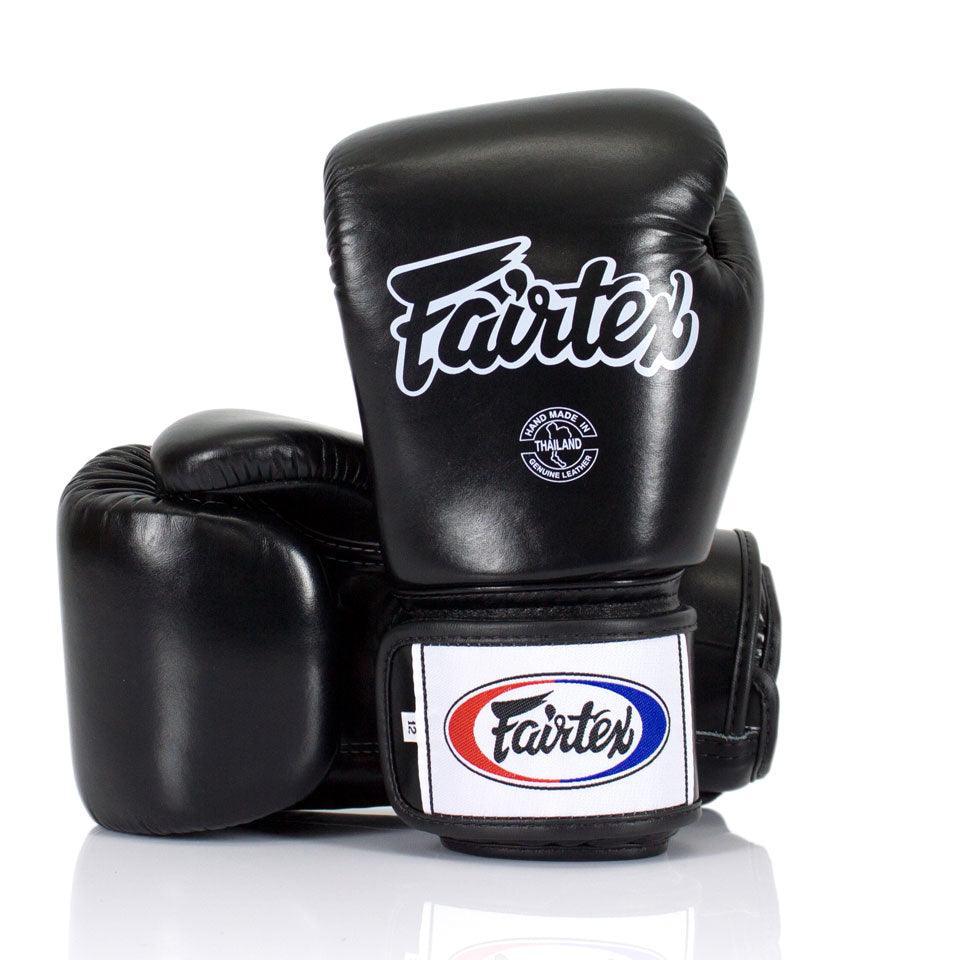
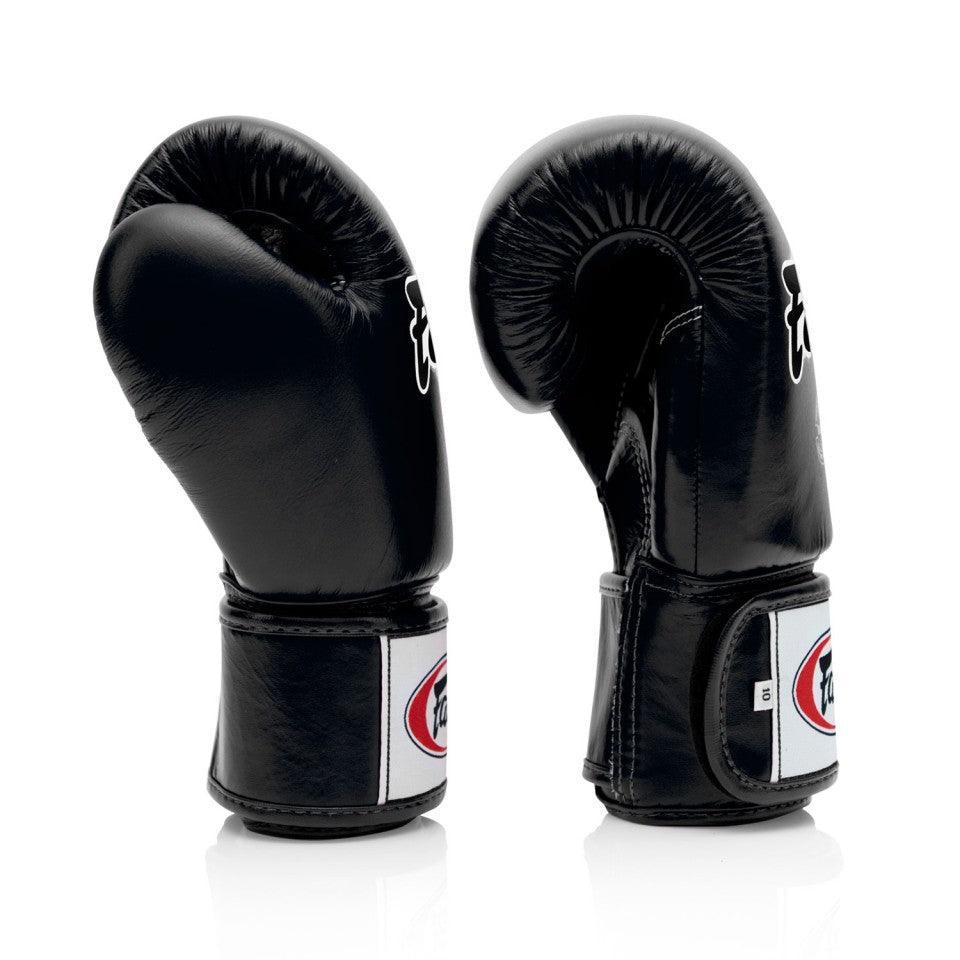
Nuam means boxing gloves. Muay Thai gloves are similar to boxing gloves but often have a more compact shape and flexible grip to allow for clinching. Common weights are 8oz (competition), 10oz, 12oz, 14oz and 16oz (sparring). Check out our range of Muay Thai gloves here.
Pad Meu (ผ้าพันมือ)
Pad meu means hand wraps. Cotton or elastic bandages wrapped around the hands and wrists before putting on gloves. Hand wraps protect the small bones in the hand and provide wrist support. Our range of hand wraps can be found here.
Fang Yang (ฟันยาง)
Fang yang means mouthguard or gum shield. Essential protective equipment worn during sparring and competition to protect the teeth and reduce concussion risk.
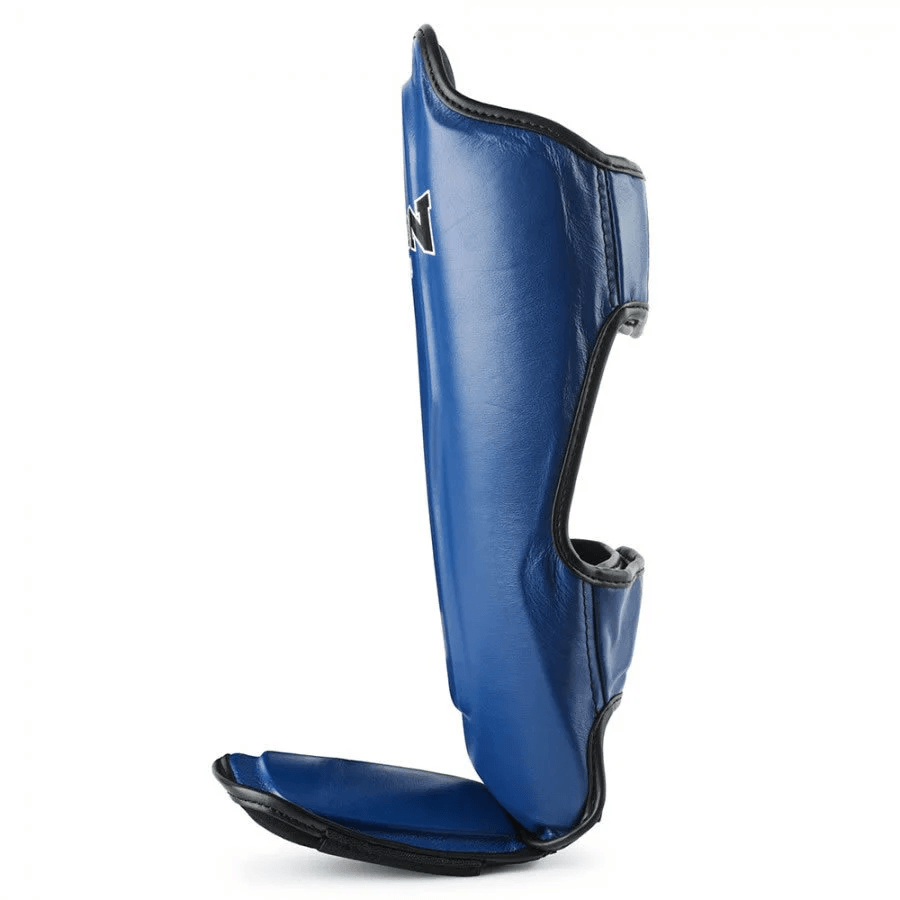
Shin Guards
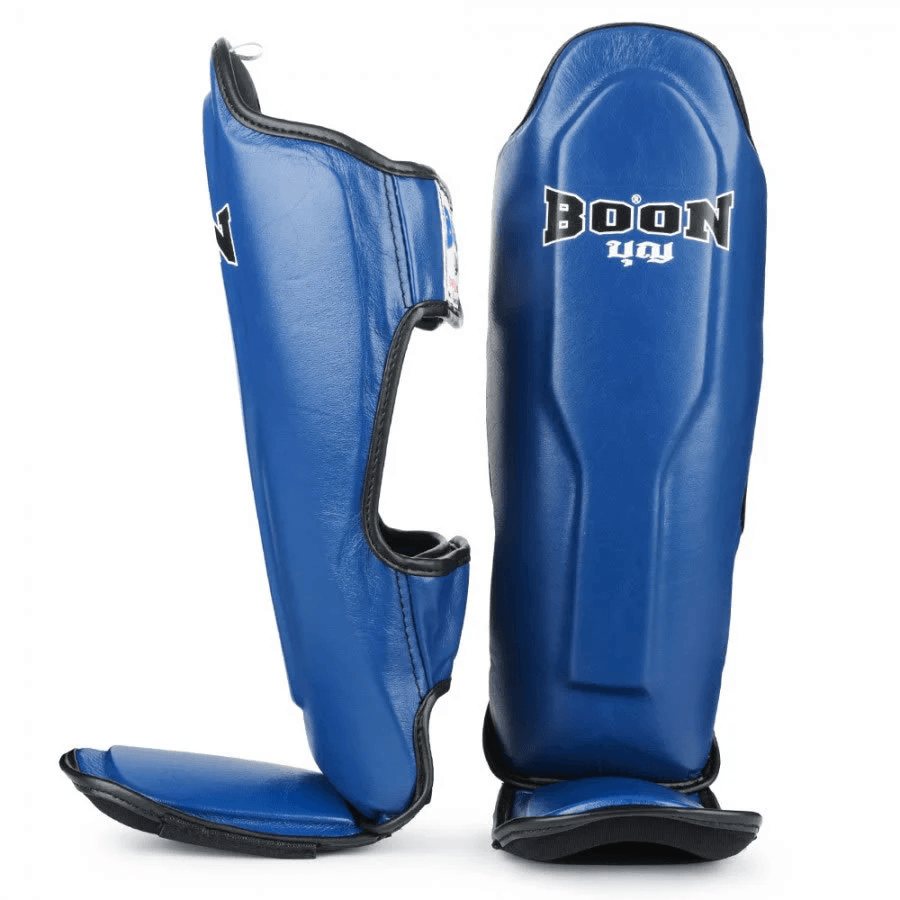
Protective equipment worn on the shins during sparring and training. Muay Thai shin guards typically cover from below the knee to the top of the foot. They protect both you and your training partner when sparring. Check out our range of Muay Thai shin guards here.
Thai Pads
Rectangular pads worn on the forearms by a trainer or partner to receive kicks, punches, knees and elbows. Thai pads are larger and thicker than focus mitts, designed to absorb the impact of full-power Muay Thai strikes. Browse our Thai pads collection here.
Ankle Supports
Elastic supports worn around the ankles during training and competition. They provide stability, protect the ankle joint and help with grip on the canvas. You will see Thai fighters wearing them in the stadiums. Browse our range of ankle supports here.
Naman Muay (น้ำมันมวย)
Naman muay means Thai boxing oil or liniment. A warming oil rubbed on muscles before training and competition to increase blood flow and prevent injury. It is the distinctive smell you notice in Thai gyms.
Thai Numbers (1-10)
Your trainer will count in Thai during pad work and drills. Here is how to count from one to ten: neung (หนึ่ง) is one, saawng (สอง) is two, saam (สาม) is three, sii (สี่) is four, haa (ห้า) is five, hok (หก) is six, jet (เจ็ด) is seven, bpaaet (แปด) is eight, gaao (เก้า) is nine, and sip (สิบ) is ten. You will hear these constantly during training: "neung, saawng, saam" as you throw combinations on the pads.
Common Phrases
Sawatdee (สวัสดี) - Hello / Goodbye
Khop Khun (ขอบคุณ) - Thank you
Kor Toht (ขอโทษ) - Sorry / Excuse me
Chok Dee (โชคดี) - Good luck
Krap / Ka (ครับ / ค่ะ) - Polite particle added to the end of sentences. Men say "krap", women say "ka".
Sabai (สบาย) - Relaxed, comfortable, good. "Sabai sabai" means take it easy.
Frequently Asked Questions
What are the 8 limbs of Muay Thai?
The eight limbs of Muay Thai are the two fists (punches), two elbows, two knees and two shins/legs (kicks). These eight points of contact give Muay Thai its nickname "the Art of Eight Limbs" and make it one of the most versatile striking martial arts. Fighters can attack effectively at long range with kicks, mid-range with punches and knees, and close range with elbows and clinch work.
What do Muay Thai fighters say before a fight?
Before a fight, Muay Thai fighters often hear "chok dee" (โชคดี), which means good luck. The fighters themselves do not typically speak before fighting. Instead, they perform the wai kru ram muay, a ritual dance that pays respect to their teachers, gym and the art of Muay Thai. This ceremony is performed in silence, accompanied by traditional sarama music.
Why do Muay Thai fighters wear headbands?
The headband worn by Muay Thai fighters is called a mongkol (มงคล). It is a sacred item that represents the fighter's gym and the knowledge passed down from their teacher. The mongkol is typically blessed by Buddhist monks and is believed to provide protection and good luck in battle. It is worn during the pre-fight wai kru ceremony and removed by the trainer before the bout begins. Fighters never wear the mongkol during the actual fight.
Why do Muay Thai fighters wear armbands?
The armbands worn by Muay Thai fighters are called prajiad (ประเจียด). Unlike the mongkol headband, prajiad are kept on throughout the fight. Traditionally, they were made from cloth given by a loved one, often torn from a parent's clothing, to provide strength and protection far from home. They symbolise the fighter's connection to family and are treated as sacred objects.
Is Muay Thai harder than boxing?
Muay Thai and boxing are different disciplines with different challenges. Muay Thai uses eight weapons (fists, elbows, knees, kicks) compared to boxing's two (fists only), which means there is more to learn and more threats to defend against. Muay Thai also includes clinch fighting, which requires additional skills and conditioning. However, boxing develops hand speed, head movement and footwork to a higher degree. Many fighters train both arts, as they complement each other well.
Summary
This Muay Thai glossary covers the essential terms you will encounter in training and competition. From basic commands like "teep" and "kao" to cultural traditions like the wai kru and mongkol, understanding these words will help you follow your trainer's instructions and deepen your appreciation for the art.
If you are just starting out, focus on the training commands and basic technique names first. The cultural and ceremonial terms will become more meaningful as you progress in your Muay Thai journey.
Related Guides
What Equipment Do You Need to Start Muay Thai
Muay Thai Shin Guard Size Guide
Browse our full Muay Thai equipment collection