
There's a moment in every Muay Thai practitioner's journey when they realise shin guards aren't optional. Usually it happens during their first proper sparring session, when an unchecked low kick reminds them exactly why protection exists - (blocking strikes accounts for 5-18% of injuries in some combat sports!). But buying shin guards isn't as simple as grabbing the first pair you see. Get the size wrong and you'll spend every round adjusting, sliding and cursing your equipment instead of focusing on your technique.
This Muay Thai shin guard size guide will help you find the perfect fit first time. We'll cover how to measure your legs, what size you need based on your height and leg size and how to tell whether your shin guards fit properly. Whether you're buying your first pair or upgrading worn-out gear, this guide has you covered.
How Should Shin Guards Fit?
Before looking at measurements and size charts, it helps to understand what you're aiming for. Shin guards that fit correctly should feel secure without restricting movement or cutting off circulation.
Signs your shin guards fit properly
Secure but not tight. Your shin guards should stay in place during movement without constant adjustment. You shouldn't need to pull them up between every round but they also shouldn't squeeze your calf so tightly that you lose feeling in your foot.
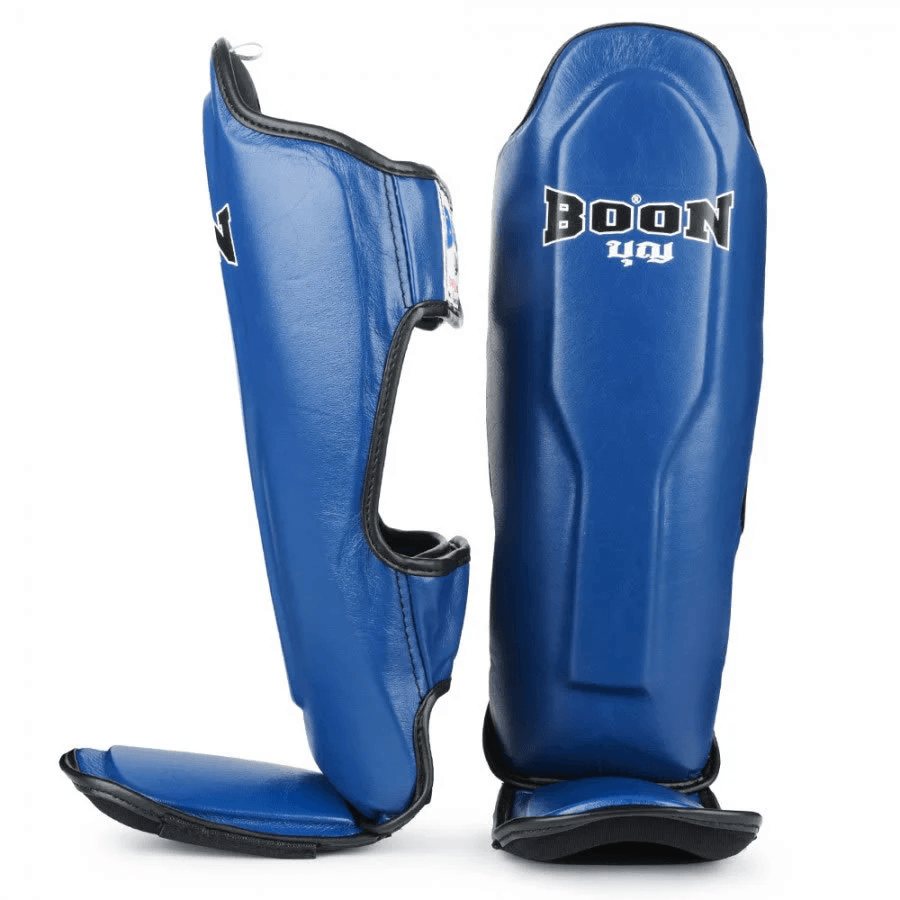
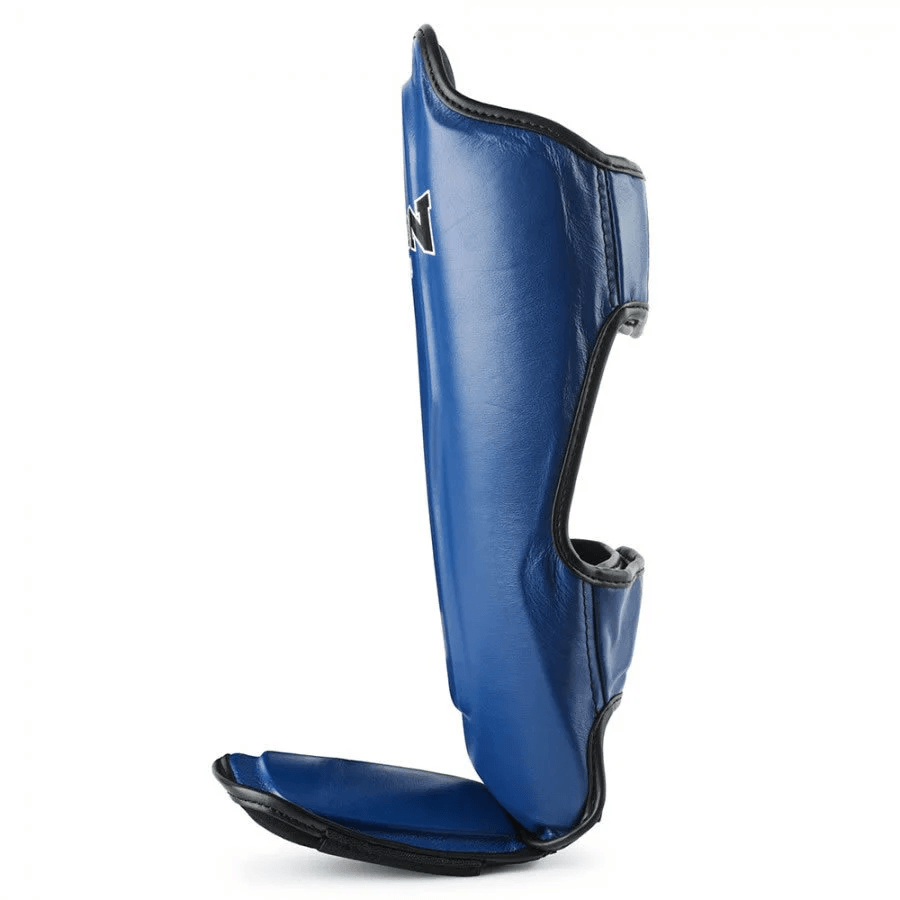
Full shin coverage. The padding should protect from just below your knee to the end of your toes – broken down into two connected pieces, the shin guard itself and the instep/foot protector. Your knee should remain free to bend naturally, while the instep protector covers the vulnerable bones on top of your foot.
Freedom of movement. You should be able to throw kicks, check kicks, and move through your full range of motion without the shin guards bunching, pinching, or shifting. Squat down, throw a few teeps, and shuffle laterally to test mobility.
No gaps at the shin bone. The padding should sit flush against your shin. Press the guard against your leg, if there's space between the padding and your bone, the fit isn't right. It should also cover around the entire front of your leg.
Here's an example of a perfect fitting pair of shinguards:

Warning signs of poor fit
- Constant sliding down during training
- Straps digging into your calf or leaving marks
- Instep protector bunching at your ankle
- Padding rotating around your leg on impact
- Restricted knee bend or ankle mobility
- Numbness or tingling in your foot
What Size Shin Guards Do I Need?
The most reliable way to find your size is to measure your leg in several places. Shin guard sizing varies between brands, so knowing your measurements lets you compare size charts accurately.
How to measure for shin guards
You'll need a flexible tape measure. If you don't have one, a piece of string and a ruler works fine.
Step 1: Measure your shin length
Sit down with your leg bent at 90 degrees. Measure from the bottom of your knee cap to the top of your foot. This gives you your shin length.
Step 2: Measure your calf circumference
Wrap the tape measure around the thickest part of your calf. This measurement helps determine whether standard or wide-fit guards will suit you better.
Again, each brand has its own size chart and it’s important you check before investing, but generally, calves sizes fall into three categories:
- Under 33cm = Narrow/Standard fit
- 33-40cm = Standard fit
- Over 40cm = Wide fit or size up
That said, not all brands provide sizes for calf size but there are designs which cater better to wider calves, like the SP5 series from Fairtex. Our comparison of the Fairtex SP5 and SP7 explains how the two fits differ and which one suits a wider calf.
Step 3: Consider your weight
Heavier practitioners often benefit from sizing up for extra padding and coverage, even if their height suggests a smaller size. The additional material provides more protection for both you and your training partners.
Shin Guard Sizing Chart by Height and Weight
While measuring gives you a clear understanding of your leg size, it’s reference against individual size charts is key to ensuring you pick the right size for each brand and design.
Below are three different size charts from three different brands - Fairtex, SKS Empire and Mongkol. While the shinguards all have similar designs, their size charts are very different:


You can see that while the first two size charts categorise heights using the same ft and inches, their corresponding shin length size is very different, as is the case with the Mongkol shin guards. We recommend ignoring the height aspects of such size charts and measuring your own leg dimensions and then matching them to the most suitable sizing.
It’s also important to remember that shinguards are typically handmade. This means there will always be some degree of variation in sizing. Account for 1-3% variance in the size charts and pick your size accordingly.
When you're between sizes
If your measurements put you between two sizes, consider these factors:
Size up if:
- You have muscular or thick calves
- You prefer more coverage and padding
- You're a heavier hitter or spar frequently
- You can always reduce the space between your leg and a slightly oversized shinguard by tightening straps or using an ankle guard on your calf.
Size down if:
- You have slim calves
- You prioritise mobility over maximum protection and comfort
- You mainly do pad work and light technical sparring
When in doubt, sizing up is generally the safer choice. Slightly larger shin guards still protect you, while undersized guards can make things very uncomfortable very quickly.
Muay Thai Shin Guards for Beginners: What to Look For
If you're new to the sport, choosing your first pair of Muay Thai shin guards for beginners can feel overwhelming. Beyond sizing, there are a few key features to consider.
Strap system
Most shin guards use either velcro straps or a sleeve/sock design.
Velcro straps are the most common. Look for guards with at least two straps - one below the knee and one around the calf. This dual-strap system prevents rotation and keeps the guard secure during movement.
Sleeve-style guards slip on like a sock and often feel more secure, but can be harder to get on and off, especially when you're sweaty. They are used in amateur competition but don’t provide the higher level of protection that you find with Velcro strap shinguards.
For beginners, velcro straps offer the best balance of security and convenience.
Padding thickness
Thicker padding offers more protection but adds weight. For beginners who are still developing their checking technique, we recommend thicker guard or ones with additional concaved padding such as these from Top King, the SP8 series from Fairtex or Mongkol's standard shin guards. As you progress and your shins condition, you might prefer lighter options for mobility.
Material
Genuine leather is durable and moulds to your leg over time but costs more and requires proper care.
Synthetic leather is more affordable, easier to clean, and perfectly adequate for most training. Modern synthetic materials are remarkably durable and a sensible choice for beginners.
When it comes to protection, foam density matters more than the outer material. Look for high-density foam that absorbs impact without compressing completely.
Instep protection
The instep protector covers the top of your foot which is a particularly vulnerable area when throwing kicks. Ensure the instep padding is thick enough to offer real protection and that it sits comfortably without bunching at your ankle.
For a full breakdown of what gear you need as a beginner and how to make the right choices, check out our essential muay thai equipment for beginners guide.
Common Shin Guard Fitting Problems and How to Fix Them
Even with careful measuring, you might encounter fitting issues. Here’s how to address them properly.
Problem: Shin guards slide down during training
Causes: Guards too large, worn-out straps, sweaty legs
Solutions:
- Try sizing down if there's excess material
- Replace guards if straps have lost their grip
- Apply athletic tape above and below the guard for extra security
- Some practitioners apply a light layer of hairspray to their legs to reduce slipping
Problem: Straps dig into your calf
Causes: Guards too small, straps overtightened, incorrect positioning
Solutions:
- Size up if the guards feel restrictive overall
- Loosen straps slightly. They should be snug but not constricting
- Reposition the guard so straps sit on muscular areas rather than bone
Problem: Instep protector bunches at the ankle
Causes: Guard too long for your leg, instep protector poorly designed
Solutions:
- Try a shorter size or different brand
- Some guards have adjustable or removable instep protectors
- Ensure the guard is positioned correctly. The top should sit just below your kneecap
Problem: Guard rotates on impact
Causes: Poor fit, single-strap design, worn padding
Solutions:
- Switch to dual-strap guards for better stability
- Ensure straps are properly tightened
- Consider guards with a contoured shape that follows your leg's natural curve
Problem: Knee mobility feels restricted
Causes: Guard positioned too high, guard too long
Solutions:
- Lower the guard position so your kneecap is completely free
- If the guard is correct length but still restricts movement, try a different brand with a more flexible design
Summary
Finding the right shin guard size doesn't need to be guesswork. Measure your shin length and calf circumference, consult the different size charts and carefully consider fit before purchasing.
Pay attention to how the guards feel during movement. Properly fitted shin guards stay in place, protect your entire shin and instep, and let you focus on your training rather than your equipment.
Remember, when you're between sizes, sizing up is usually the smarter choice. A little extra coverage is always better than leaving your shin bone exposed.
Ready to find your perfect fit? Browse our complete range of Muay Thai shin guards in all sizes from the best brands. Train with safety and confidence.